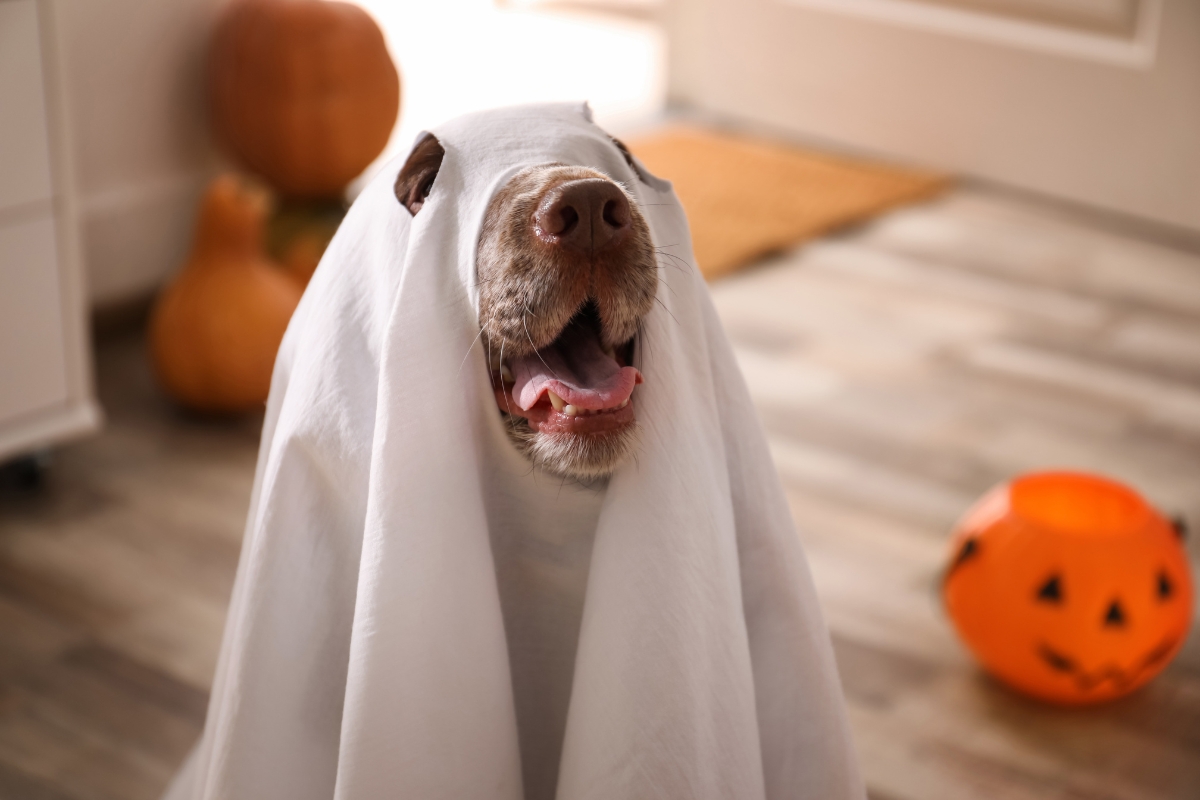
Halloween gives families plenty of reasons to have fun, and pets often become part of the celebration. A dog dressed as a pumpkin or a cat wearing a tiny cape can make for a memorable photo. However, what looks cute to us may feel uncomfortable, frightening, or even unsafe to an animal.
Dogs and cats do not understand why they are suddenly wearing clothing, hats, masks, or accessories. Some pets tolerate costumes without a problem. Others may freeze, hide, paw at the outfit, or desperately try to remove it.
The safest Halloween costume is one that fits properly, allows normal movement, and does not interfere with your pet’s natural behavior. More importantly, your pet should be comfortable wearing it.
Here is what pet parents should consider before dressing up a dog or cat this Halloween.
Should Your Dog or Cat Wear a Halloween Costume?
Start with your pet’s personality rather than the costume. A social dog that regularly wears sweaters may be perfectly comfortable in a lightweight Halloween outfit. A shy cat that dislikes being handled may find even a simple costume stressful.
The ASPCA recommends avoiding costumes unless you know your pet is comfortable wearing one. Costumes should never restrict movement, vision, breathing, barking, or meowing.
Ask yourself:
- Does my pet normally tolerate clothing?
- Does my pet become nervous when something is placed over the head?
- Can my pet walk naturally while wearing the costume?
- Is my pet trying to bite or remove the outfit?
- Does the costume interfere with the collar, harness, or identification tag?
- Can my pet sit, lie down, eat, drink, and use the bathroom normally?
If your pet clearly dislikes being dressed up, skipping the costume is perfectly reasonable. A Halloween-themed collar or simple bandana can provide a festive look with less restriction.
Effective Ways to Pick a Safe Halloween Costume for Your Dog or Cat
Choose the Correct Size
A costume that is too tight can restrict normal movement and cause rubbing or discomfort. One that is too loose can twist, slip over your pet’s face, or catch on furniture and other objects.
Follow the manufacturer’s sizing instructions rather than choosing a costume based only on your pet’s weight. Measure the areas requested on the size chart. Depending on the costume, these may include the neck, chest, back length, or other measurements.
Once the costume is on, watch your pet walk around the house. Your dog or cat should be able to move naturally. Look for awkward steps, stiffness, slipping fabric, or attempts to escape the outfit.
Keep the Face, Eyes, Nose, and Mouth Uncovered
Masks may look funny in Halloween photos, but covering a pet’s face creates unnecessary risks. Your pet needs an unobstructed view of the surroundings. Dogs and cats also need to breathe, vocalize, drink, and respond normally to what is happening around them.
Avoid costumes that cover or press against the:
- Eyes
- Nose
- Mouth
- Ears
- Whiskers
Headpieces can also become irritating or frightening, particularly when they move unexpectedly. The ASPCA specifically advises pet parents to consider avoiding costume headpieces.
A simpler costume that stays below the neck is often easier for pets to tolerate.
Avoid Small and Dangling Costume Pieces
Buttons, bells, beads, strings, ribbons, fake jewelry, plastic decorations, and similar accessories may become chewing targets. A pet could pull off a loose piece and swallow it. Depending on its size and shape, an object could become a choking hazard or cause problems within the digestive tract.
Inspect a costume carefully before putting it on your pet. Gently pull on attached decorations. If something appears easy to remove, do not assume your pet will leave it alone. Costumes without unnecessary accessories are usually a safer choice.
Make Sure Your Pet Can Move Normally
A costume should never change the way your pet has to walk. Pay particular attention to fabric around the legs and paws. A costume that slides downward can interfere with normal steps and potentially cause your pet to stumble.
After putting the outfit on, encourage your pet to walk a short distance indoors. Watch them turn, sit, lie down, and stand again.
If their movements appear restricted, remove the costume. This test is especially important before taking a dog outside, where stairs, uneven ground, crowds, and reduced visibility may add further risks.
Choose Lightweight, Breathable Material
Halloween celebrations can involve considerable activity. Dogs may become warm while walking around the neighborhood, while indoor parties can become crowded and warm.
Avoid unnecessarily heavy costumes. The material should allow your pet to move comfortably without becoming overheated. Thick layers, bulky padding, and tightly fitted outfits may be uncomfortable when worn for an extended period.
Pay attention to your pet while the costume is on. Heavy panting, excessive drooling, weakness, unusual restlessness, or difficulty breathing should never be ignored. Remove the costume and move your pet to a comfortable environment.
Contact a trusted veterinarian in Henrietta if symptoms continue or appear severe.
Test the Costume Before Halloween
Do not make Halloween night the first time your pet wears the costume. Try it several days beforehand in a quiet, familiar room.
Start briefly. Let your pet investigate the costume before putting it on. Once dressed, provide praise or a pet-safe treat if your pet remains relaxed.
Watch how your pet responds. Some animals need a little time to adjust. Others make it clear immediately that they do not want to wear clothing.
A trial run also gives you an opportunity to discover practical problems, such as loose straps, restricted movement, or fabric that repeatedly shifts out of position.
Learn to Recognize Signs That Your Pet Wants the Costume Removed
Pets cannot tell us that a costume is uncomfortable, but their body language can say plenty.
Signs that your dog or cat may be uncomfortable include:
- Freezing or refusing to move
- Trying repeatedly to remove the costume
- Hiding or attempting to escape
- Excessive panting when the environment is not warm
- Trembling
- Crouching
- Flattened ears
- Tucked tail
- Unusual vocalization
- Restlessness
- Repeated lip licking in dogs
- Swatting or defensive behavior in cats
Do not force your pet to keep wearing an outfit for photographs or guests.
Remove it and allow your pet to settle somewhere familiar.
Never Leave a Costumed Pet Unattended
Even a well-fitting costume can shift. A strap may catch on furniture. Fabric can become twisted around a leg. A bored dog may chew a decoration, while a cat may attempt to pull or bite through part of the outfit.
Supervision allows you to respond before a minor costume problem becomes an injury. Once you cannot directly supervise your pet, remove the costume.
Keep the Collar, ID Tag, and Leash Accessible
Halloween creates unusual activity around many homes. Doors open frequently for trick-or-treaters, unfamiliar visitors arrive, and people may be wearing costumes that frighten otherwise confident pets. The ASPCA recommends keeping proper identification on pets and securely leashing pets taken outside after dark.
Do not let a Halloween costume replace your pet’s identification. If your dog will be outside, make sure the leash attaches securely without the costume interfering with the collar or harness.
Visibility also matters after sunset. Reflective pet gear can help make a dog easier to see during an evening walk.
Be Extra Careful With Cats
Many cats are less accustomed to wearing clothing than dogs. An uncomfortable cat may freeze rather than struggle, so a quiet response does not necessarily mean the cat likes the costume.
Watch your cat’s posture carefully. Flattened ears, a tucked body position, tail flicking, hiding, growling, or trying to escape can indicate that the experience is unwelcome.
For many cats, a festive collar or other minimal accessory may be more practical than a full-body costume. Whatever you choose, make sure it cannot become caught around the neck or jaw.
When Does a Costume Problem Need Veterinary Attention?
Most costume problems can be prevented by choosing the right outfit and supervising your pet. However, accidents can still happen.
Seek veterinary guidance if your pet:
- Swallows part of a costume
- Has difficulty breathing
- Appears weak or collapses
- Develops an injury after becoming tangled
- Has persistent coughing, gagging, or choking
- Shows signs of significant overheating
- Develops unusual symptoms after chewing costume material
- Cannot walk normally after a fall or costume-related accident
If something seems wrong after the costume has been removed, do not simply assume your pet needs time to recover. Instead, look for a reliable vet near you or simply contact our veterinarian for professional guidance.
Keep Halloween Fun Without Compromising Your Pet’s Comfort
Halloween can be a fun night for the entire household, but your pet does not need an elaborate outfit to be part of it. Choose a costume based on comfort rather than appearance. Check the fit, remove choking hazards, keep your pet’s face clear, and supervise them whenever they are dressed.
Most importantly, pay attention to what your dog or cat is telling you. If the costume causes fear, frustration, restricted movement, or unusual behavior, take it off. Apart from that, if you find your pet needs professional evaluation, contact us as soon as possible.
Frequently Asked Questions
Q1. How do I know if my dog’s Halloween costume is too tight?
Ans. Watch how your dog moves and check areas around the neck, chest, legs, and abdomen. The costume should not restrict breathing or normal movement. Remove it if your dog appears uncomfortable, walks unusually, or repeatedly tries to escape from it.
Q2. Is it safe to put a Halloween costume on a cat?
Ans. Some cats tolerate simple clothing, but many do not enjoy being dressed. Never force a cat into an outfit. Avoid anything that restricts movement, vision, breathing, or normal behavior. A lightweight Halloween accessory may be a better option.
Q3. What should I do if my pet swallows part of a Halloween costume?
Ans. Call a veterinary professional promptly rather than waiting for symptoms. Swallowed fabric, string, plastic, or decorations can cause choking or gastrointestinal problems. Do not induce vomiting unless a veterinary professional specifically instructs you to do so.
Q4. Where can I take my pet for urgent veterinary care in Henrietta, NY?
Ans. Ark Veterinary Hospital & Urgent Care provides urgent veterinary care in Henrietta during its operating hours and asks pet owners to call first at 585-487-8700. Calling ahead allows the team to triage the situation and provide guidance about the next steps. The hospital is not open 24/7, so some emergencies may require referral to a 24-hour facility.
Q5. Can Ark Veterinary Hospital & Urgent Care help if my dog or cat is injured on Halloween?
Ans. Yes. Ark Veterinary Hospital & Urgent Care provides urgent care as part of its veterinary services and has a veterinarian available for urgent cases during operating hours. Pet parents should call 585-487-8700 first if urgent care is needed so the team can assess the situation and advise them appropriately.
Q6. Does Ark Veterinary Hospital & Urgent Care provide routine care as well as urgent care in Henrietta?
Ans. Yes. Ark Veterinary Hospital & Urgent Care is a full-service animal hospital. Its services include wellness care, diagnostic care, surgery, dental care, laser therapy, puppy and kitten care, senior pet care, exotic pet care, and urgent care. The hospital is located at 35 Finn Road in Henrietta and serves pets from Henrietta and surrounding Rochester-area communities.