
Bath time can be stressful for many dogs, and senior dogs are no exception. Age-related issues like arthritis, reduced mobility, and sensory changes can make bathing uncomfortable or even frightening. However, keeping your senior dog clean is essential for maintaining healthy skin, coat, and overall wellness. With patience, preparation, and a few helpful techniques, you can make bath time a calm, safe, and even enjoyable experience for your older companion.
Why Bathing Senior Dogs Can Be Challenging
As dogs age, they may develop:
- Joint stiffness or arthritis that makes standing or climbing into a tub painful
- Reduced hearing or vision, making unfamiliar sounds or environments intimidating
- Sensitive skin that is prone to dryness or irritation
Understanding these challenges is the first step toward creating a stress-free bathing experience.
1. Prepare the Bathing Area
Make your senior dog comfortable before the bath begins:
- Use a non-slip mat to prevent slipping in the tub
- Keep the water warm, not hot or cold, to avoid discomfort
- Have all supplies (shampoo, towels, brush) within reach to avoid leaving your dog unattended
2. Choose a Gentle Shampoo
Senior dogs often have more sensitive skin. Use shampoos specifically formulated for older dogs or those with sensitive skin. Avoid harsh chemicals and strong fragrances that may irritate their skin.
3. Brush Before Bathing
Brushing your dog beforehand removes loose hair, tangles, and debris, reducing the chance of matting and making the bath quicker and more comfortable. Brushing also gives you a chance to check for skin issues or lumps that might need veterinary attention.
4. Make It a Calm Experience
Senior dogs can become anxious with sudden movements or loud noises. Speak softly, move slowly, and use gentle handling techniques. Praise and offer treats throughout the bath to create positive associations.
5. Use Handheld Sprayers or Cups
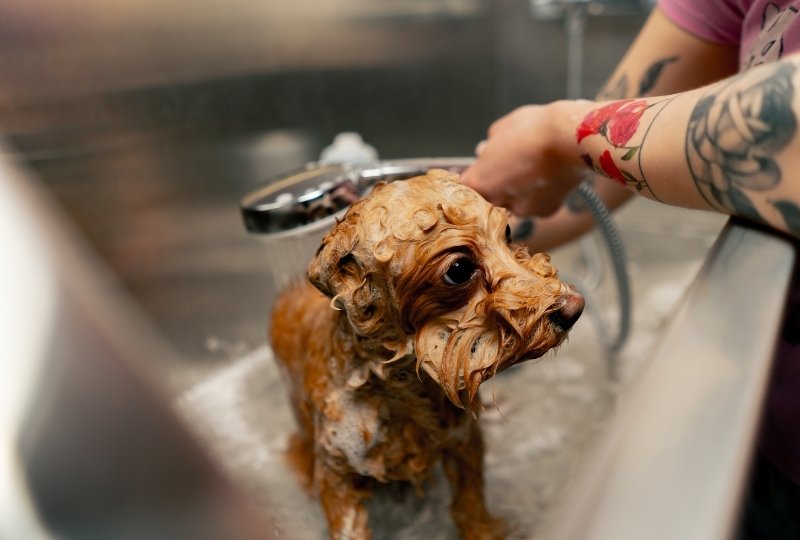
Many senior dogs are uncomfortable with large showers. Using a handheld sprayer or cup allows you to control water flow and direction, making the bath less intimidating. Avoid spraying directly in the face and ears.
6. Keep Baths Short
Extended bath times can increase stress for older dogs. Focus on the areas that need cleaning most, such as the paws, underarms, and rear. Quick, focused baths are more tolerable for senior dogs and reduce fatigue.
7. Support Your Dog’s Joints
Consider using a ramp or step stool for easy access to the tub. For dogs with arthritis, a caregiver’s support or using a bath bench can reduce strain and prevent slipping.
8. Dry Carefully
Pat your dog dry with soft towels instead of vigorous rubbing. If using a blow dryer, use a low heat and low noise setting to avoid frightening your dog. Ensure they are fully dry, especially in folds or undercoat areas, to prevent skin irritation.
9. Reward Positive Behavior
Offer treats, praise, and gentle petting after the bath. Rewarding calm behavior reinforces a positive association with bath time, helping your senior dog feel more relaxed during future baths.
10. Consider Professional Help
If your senior dog is particularly anxious or has mobility issues, professional groomers or veterinary staff can help. They have the equipment, experience, and gentle handling techniques to make baths safer and less stressful.
Bathing a senior dog doesn’t have to be a stressful experience. With careful preparation, gentle handling, and positive reinforcement, you can make bath time safe, comfortable, and even enjoyable. Regular baths help maintain healthy skin and coat, prevent infections, and strengthen the bond between you and your senior dog.
If you’re in Henrietta, NY, and looking for guidance to make bath time easier for your senior dog near me, Ark Veterinary Hospital & Urgent Care offers expert advice, wellness checkups, and support to keep your older companion healthy and happy.
FAQs
1. How often should I bathe my senior dog?
Once a month is usually sufficient unless your dog gets especially dirty or has a medical condition requiring more frequent baths.
2. Can I use human shampoo on my dog?
No. Human shampoos can irritate a dog’s skin. Use pet-safe, gentle shampoos.
3. My dog hates water—what can I do?
Introduce water gradually, use positive reinforcement, and start with sponge baths if full baths are too stressful.
4. Are wipes a good alternative for senior dogs?
Yes. Dog wipes can be used to clean paws, face, and small areas between baths.
5. What should I do if my senior dog has skin issues?
Consult your veterinarian for specialized shampoos or treatments. Some skin conditions require medicated baths.
6. How can I make future baths easier?
Maintain a consistent routine, use positive reinforcement, and address any mobility or anxiety issues proactively.